Saturday, October 6, 2012

Blue Ridge WMA: The North Route


September 2nd, 2012. It was the Labor Day (US) holiday weekend so we took the opportunity to make an overnight trip into the Chattahoochee National Forest. After making our way out of the Coopers Creek Wildlife Management Area, we drove up to Blue Ridge for the night. We retraced our way up the Noontootla River Valley through the Blue Ridge Wildlife Management Area as we had in mid-December 2011. We hadn’t seen many wildflowers on that trip. We saw a variety of wildflowers on this trip. The first section of the trip was on the Forest Service road to the junction with the road to the Appalachian Trail parking area below Springer Mountain.

Last year, we drove on to the southwest. This year, we retraced our route and continued north to GA-60. The road to/from the Appalachian Trail parking lot below Springer Mountain back to the junction with the Noontootla River road is an east-west road. The north side is dry but the south side is sheltered with some, probably seasonal, seeps that maintain a moist environment.  Here we found…

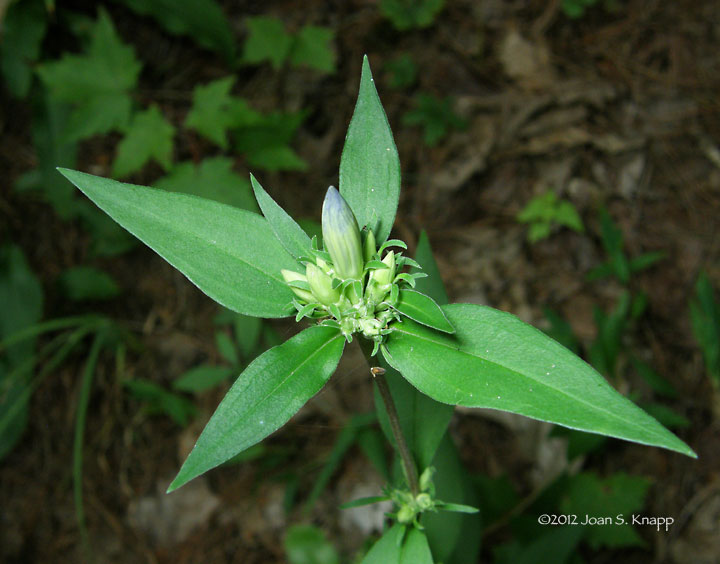
gentians, probably Gentiana saponaria (Soapwort Gentian, Harvest Bells) in bloom along the embankment.


Closer views

In one of the moister areas we found unusual ferns and empty seedpods from flowers that had bloomed earlier. An area to visit again.

A large patch of Collinsonia canadensis (Richweed) plants were blooming on the north side of the road.

An individual plant in the patch


Close-ups of individual flowers

When we reached the junction with the Noontootla River road, we continued north on Winding Stair Gap Road. The road ran along the top of the ridge. We found…


Aureolaria flava (Smooth Yellow False Foxglove)

The Appalachian Trail crossed the road. Here the Winding Stair Gap Road split into the Appalachian Blue Ridge Road to the right, and Rock Creek Road to the left. We took Rock Creek Road which ran north past Rock Creek Lake to the Chattahoochee National Fish Hatchery and on through the Blue Ridge WMA to GA-60.

We found a small patch of Conoclinium coelestinum (Blue Mistflower, Mistflower, Wild Ageratum, Hardy Ageratum) near the fish hatchery

A Dog Day cicada (Tibicen sp.) was sunning itself in a nearby plant

A clematis, probably Clematis virginiana (Virgin’s Bower) had finished blooming and was setting seed

Seed pods of Asclepias tuberosa (Butterfly Milkweed) were releasing their seeds

The Oenothera biennis (Evening primrose) plants had finished blooming and were setting seed


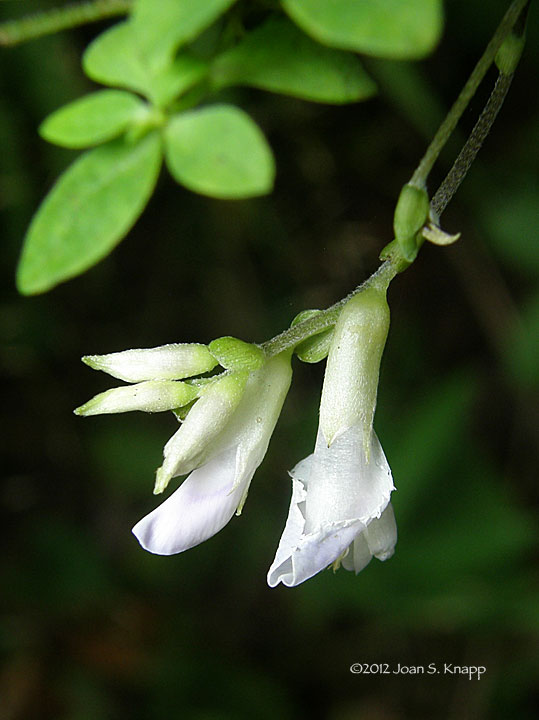
Amphicarpa bracteata (Hog Peanut) vines were common

The sad note for the day was the sighting of a Copperhead (Agkistrodon contortrix) that had been killed while crossing the road. It did provide the opportunity for a photograph without having to worry about being bitten.

Next: The high points – Dianna and Great Spangled Fritillaries
Click on an image to view a larger image

Identification resources:
Southeastern Flora:
- Aslepias tuberosa (Butterfly Milkweed)  
- Oenothera biennis (Evening primrose) 

Name that Plant: Native and Naturalized Plants of the Carolinas and Georgia:

Distribution:
United States Department of Agriculture Plants Database:

SavannahRiver Ecology Laboartory: Copperhead (Agkistrodon contortrix)
Related posts:
- Tough Life For A Milkweed: Aphis nerii & Oncopeltus fasciatus

Friday, October 5, 2012

Tough Life For A Milkweed: Aphis nerii & Oncopeltus fasciatus

-->
September 2nd, 2012. It was the Labor Day (US) holiday weekend so we took the opportunity to make an overnight trip into the Chattahoochee National Forest. After making our way out of the Coopers Creek Wildlife Management Area, we drove up to Blue Ridge for the night. We retraced our way up the Noontootla River Valley through the Blue Ridge Wildlife Management Area as we had in mid-December 2011. We hadn’t seen many wildflowers on that trip. We saw a variety of wildflowers on this trip. The first section of the trip was on the Forest Service road to the junction with the road to the Appalachian Trail parking area below Springer Mountain. Then we drove out to the Appalachian Trail about half-a-mile north of it’s origin on the top of Springer Mountain.

We found more milkweed plants like those we had seen on the road along the Noontootla River. The plants in the valley had been growing in the shade. Even then I could see some aphids on the seed pods but couldn’t reach the plants because of a deep ditch between the road and the embankment.  But here, the plants were growing in full sun and we could walk up to the plants. We found not only aphids but milkweed bugs.


Aphis nerii (Oleander or Milkweed Aphid)
This is the first time I’ve seen the Oleander/Milkweed Aphid

The aphids covered large areas on some seed pods

A closer view. 

Still closer. For some really close-up photos, click here
 
Oncopeltus fasciatus (Large Milkweed Bug)
I’ve seen and photographed Large Milkweed bugs before but this is the first time I’ve seen the nymphs clustered like this.

A single cluster of nymphs at the base of a leaf

One brave little soul which had climbed up to the top of a stem

It's a tough life for a milkweed plant.
Click on an image to view a larger image

Identification resources:
- Name that Plant: Native and Naturalized Plants of the Carolinas and Georgia: Asclepias exaltata (Poke Milkweed, Tall Milkweed)
- Robert W. Freckmann Herbarium: Asclepias exaltata (Poke Milkweed, Tall Milkweed)
University of Florida/Florida Department of Agriculture and Consumer Services: Aphis nerii (Oleander Aphid) 


Distribution:
United States Department of Agriculture Plants Database:

Related posts:
- Over The Hills And Through The Woods: Noontootla Creek AndSpringer Mountain

Thursday, October 4, 2012

Blue Ridge WMA: Noontootla River Valley to Springer Mountain Junction

September 2nd, 2012. It was the Labor Day (US) holiday weekend so we took the opportunity to make an overnight trip into the Chattahoochee National Forest. After making our way out of the Coopers Creek Wildlife Management Area, we drove up to Blue Ridge for the night. We retraced our way up the Noontootla River Valley through the Blue Ridge Wildlife Management Area as we had in mid-December 2011. We hadn’t seen many wildflowers on that trip. We saw a variety of wildflowers on this trip. The first section of the trip was on the Forest Service road to the junction with the road to the Appalachian Trail parking area below Springer Mountain.

The mountains northeast of Blue Ridge. It’s easy to see how the mountains got their name.


We only caught fleeting glimpses of the Noontootla River. The view is obscured by pine tress and rhododendrons

We found a large patch of milkweed plants with seed pods. I’m guessing these are Asclepias exaltata (Poke Milkweed) but it’s going to mean a trip back next Spring to verify the identification when the plants are blooming. These plants have only been documented in far northern counties in Georgia, including Fannin County. In anticipation, here are some photographs of the plant and flowers.

Seedpods were long and slender. Some plants had two seed pods


Individual Richweed (Collinsonia canadensis) plants were growing along the edge of the road.

Downy Rattlesnake Plantain (Goodyera pubescens) plants had bloomed this year. Good cause for another trip back to this beautiful valley next year

A close-up view of developing seed pods

Small Bonny Bellflowers (Campanula divaricata) were growing along the road embankment

Mountain Aster (Eurybia chlorolepis) plants were blooming. These stood out among the wildflowers we saw.

White Snakeroot (Ageratina altissima) flowers were a little past their best but still stood out.

At the junction of the road at the top of the ridge, we turned southwest and drove out to the Appalachian Trail below Springer Mountain.
Next: Out to Springer Mountain and back
Click on an image to view a larger image

Identification resources:
Southeastern Flora:
- Goodyera pubescens (Downy Rattlesnake Plantain)
- Ageratina altissima (White Snakeroot)
Name that Plant: Native and Naturalized Plants of the Carolinas and Georgia: Eurybia chlorolepis (Blue Ridge White Heart-leaved Aster)

Distribution:
United States Department of Agriculture Plants Database:

Tuesday, October 2, 2012

Showy or Appalachian Gentian (Gentiana decora)

September 1st, 2012. It was the Labor Day (US) holiday weekend so we took the opportunity to make an overnight trip into the Chattahoochee National Forest. After leaving Dockery Lake, we drove further up GA-60 to the Coopers Creek Wildlife Management Area.  Cavender Gap Road headed up to a ridge and made its way along the ridge before dropping back down to Cooper Creek and followed it back to GA-60.

It was getting late when we drove down off the ridge and weren’t really taking as much notice as usual in the fading light. But then we spotted some gentian plants on an embankment beside the road. There were probably a dozen plants, each about 18 to 24 inches tall.

The plants were close to the road

A closer view of the top of a plsnt

Flowers lower on the plant

Flowers at the tip of the plant

Buds on another stem

An open flower. This isn’t the best photo since the light was low but we take what we can get.

Not being that familiar with gentians, I thought this was Gentiana villosa, the Striped Gentian but as I researched it further, I came to the conclusion that this was Gentiana decora, the Showy or Appalachian Gentian.
 
Gentian decora (Showy Gentian, Appalachian Gentian, Striped Gentian) is native to the United States where it had been documented in southeastern states: Virginia, West Virginia, Kentucky, Tennessee, North and South Carolina and Georgia. In Georgia, it’s been documented only in a few counties in North Georgia including Union County.
Click on an image to view a larger image

Identification resources:
Southeastern Flora: Gentiana decora (Showy Gentian)
Native and Naturalized Plants of the Carolinas and Georgia: Gentiana decora (Appalachian Gentian, Showy Gentian)
Alan Cressler: Gentiana decora
Jim Petranka: Gentiana decora (Appalachian Gentian)

Distribution:
United States Department of Agriculture Plants Database:
Related posts:

Monday, October 1, 2012

Wildflowers: Coopers Creek Wildlife Management Area, Part II


September 1st, 2012. It was the Labor Day (US) holiday weekend so we took the opportunity to make an overnight trip into the Chattahoochee National Forest. After leaving Dockery Lake, we drove further up GA-60 to the Coopers Creek Wildlife Management Area. Coopers Creek Road headed up to a ridge and made its way along the ridge before dropping back down to Cooper Creek and followed it back to GA-60. This road ran through a drier area that presented different wildflowers.


Phlox paniculata (Fall Phlox, Garden Phlox, Summer Phlox, Smooth Phlox)

We found these in many places, particularly on road embankments

Rudbeckia hirta var. hirta (Woodland Black-eyed Susan)
This is my best guess for this flower. Any correction is welcome

The flowers

The leaves

Cantharellus cinnabarinus (Red Chanterelle)
There were clusters of this chanterella beside the road in several places

The cluster

A closer view

Vernonia noveboracensis (New York Ironweed)
http://www.namethatplant.net/plantdetail.shtml?plant=1609

This field was full of ironweed plants

Actaea pachypoda (Doll's eyes)
We saw these from time to time

The leaves were still visible but weren’t in very good shape

Rhexia virginica (Virginia Meadowbeauty, Deergrass, Wingstem Meadowbeauty, Handsome Harry)
We found these plants by the roadside in several areas

*****
*****
The flowers

The leaves

Amphicarpa bracteata (Hog Peanut)
This is a vine that was very widespread

*****
The flowers

The leaves. These had folded down; there are three leaves

Lycopodium digitatum (Fan Clubmoss, Running Cedar, Fan Ground-pine, Running Ground Pine, Common Running-pine)
The Fan Clubmoss occurs in many places in the mountains. They are just starting to fruit.

*****

Arnoglossum atriplicifolium (Pale Indian Plantain)
These were common on roadside embankments

*****
The flowers

The leaves

Stenanthium gramineum (Eastern Featherbells, Common Featherbells)
.We saw a few plants but not nearly as many as at Dockery Lake. This area was drier than the Dockery Lake road.

This stem had bent over under the weight of the flowers. See more photographs here

Next: Gentiana decora (Showy Gentian)
Click on an image to view a larger image

Identification resources:
Southeastern Flora:

Native and Naturalized Plants of the Carolinas and Georgia:
- Actaea pachypoda (Baneberry)

Distribution:
United States Department of Agriculture Plants Database:
 

Related posts: