The route… I’ve described it here, here, here, and here This walk doesn’t have the variety of wildflowers as my other
walk from the Group A Shelter to the Old Fort but it does have some gems. One
of the Smallflower (Asimina parviflora) had developed fruit, the Pink Lady’s
Slipper (Cypripedium acaule) Orchids had been blooming for a week or so and some
Green Adder’s-mouth Orchids (Malaxis uniflora) were beginning to bloom.

Setting out on the trail on another sunny morning; so nice after
the many gray days we’d had.

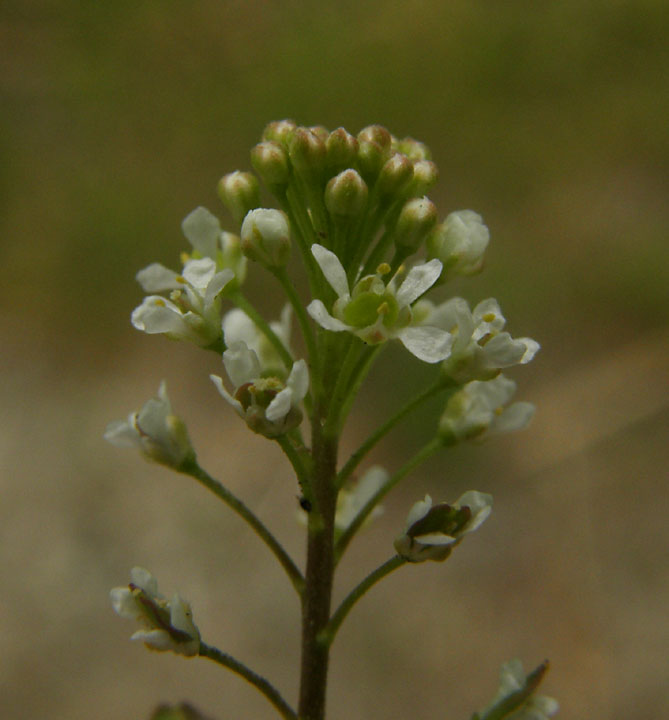
There were many Virginia Pepperweed (Lepidium virginicum) plants in the
grass. The flowers are so tiny that they go unnoticed until the…


I was checking some lichens on a branch that also had a lot
of Amber Jelly Roll (Exidia
recisa). I’d never thought much about what happens to a jelly fungus when it
dries up. This is what one looks like when it's dry.


The woods were becoming more shady.
Having found the dried-up Amber Jelly fungus, I looked for
the…

Witch’s Butter (Tremella mesenterica) that had also dried
up. It was still there.

One of the hawthorns (Crataegus sp.) in the woods still had
a couple of blooms.

Then to climb up ‘The Hill’ to check on the…

Smallflower Pawpaw fruit. Several fruits were still
attached.

Two little pine seedlings were still growing in the cavity on
a fallen log.

I took the trail to the…

Tulip Poplar (Liriodendron tulipifera). Many of the flower
buds had fallen off; only one remained close to the trail.

There were a lot of Spring Azure (Celastrina ladon) butterflies around
this spring but they rarely stayed still.

The woods, viewed from the end of the dam, were still a
mixture of different greens.

Then off down the trail to the Pink Lady’s Slipper Orchid
patch.
(To be continued…)
Related
posts:
- Spring Is In The Air: Fort Yargo State Park, Section B To The Dam, April 26th (Part 2)
- Spring Is In The Air: Fort Yargo State Park, Section B To The Dam, April 26th (Part 1)
- Spring Is In The Air: Fort Yargo State Park, Section B To The Dam, April 17th (Part 2)
- Spring Is In The Air: Fort Yargo State Park, Section B To The Dam, April 17th (Part 1)
- Spring Is In The Air: Fort Yargo State Park, Section B To The Dam, April 12th (Part 2)
- Spring Is In The Air: Fort Yargo State Park, Section B To The Dam, April 12th (Part 1)
- Spring Is In The Air: Fort Yargo State Park, Section B To The Dam, April 5th
- Spring Is In The Air: Fort Yargo State Park, Section B To The Dam
- Out With The Old; In With The New (Part 2)
- Spring Is In The Air: Fort Yargo State Park, Section B To The Dam, April 26th (Part 1)
- Spring Is In The Air: Fort Yargo State Park, Section B To The Dam, April 17th (Part 2)
- Spring Is In The Air: Fort Yargo State Park, Section B To The Dam, April 17th (Part 1)
- Spring Is In The Air: Fort Yargo State Park, Section B To The Dam, April 12th (Part 2)
- Spring Is In The Air: Fort Yargo State Park, Section B To The Dam, April 12th (Part 1)
- Spring Is In The Air: Fort Yargo State Park, Section B To The Dam, April 5th
- Spring Is In The Air: Fort Yargo State Park, Section B To The Dam
- Out With The Old; In With The New (Part 2)
- Out With The Old; In With The New (Part 1)
- Well… So Much For Walking The Beach
- Winter Walk: Fort Yargo State Park – Section B To The Dam (Part 4)
- Winter Walk: Fort Yargo State Park – Section B To The Dam (Part 3)
- Winter Walk: Fort Yargo State Park – Section B To The Dam (Part 2)
- Winter Walk: Fort Yargo State Park – Section B To The Dam (Part 1)
- Well… So Much For Walking The Beach
- Winter Walk: Fort Yargo State Park – Section B To The Dam (Part 4)
- Winter Walk: Fort Yargo State Park – Section B To The Dam (Part 3)
- Winter Walk: Fort Yargo State Park – Section B To The Dam (Part 2)
- Winter Walk: Fort Yargo State Park – Section B To The Dam (Part 1)