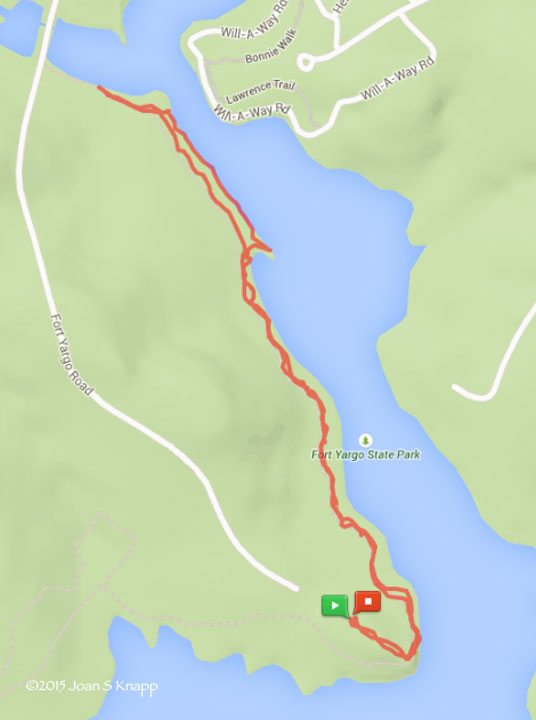
The early spring wildflowers have finished blooming; it’s time to
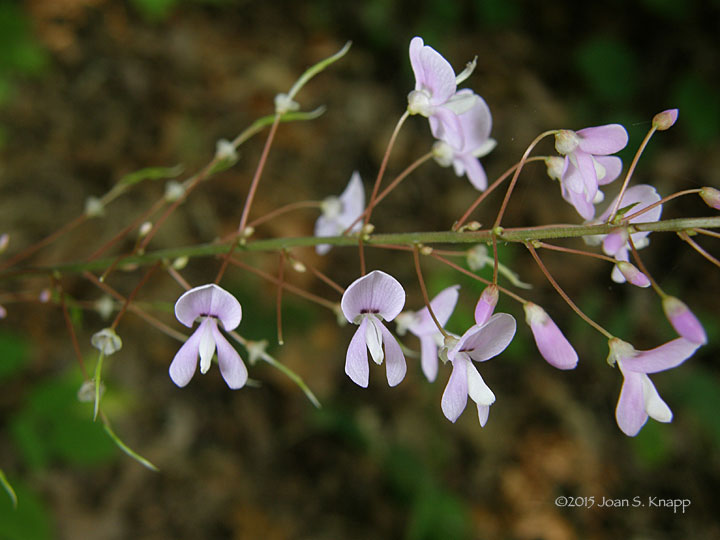
watch the developing fruit. A few late spring/summer wildflowers are blooming
now.


A few critters that I wasn’t able to identify crossed my path.


I wandered along the edge of the disc golf ‘green’ and
found…




Just a little further along the trail above the cliff, I’d spotted some bracket fungi at the base of the stump of a dead tree. I took a closer look this time.


Then, onto the Fishing Area and the ‘Rock Garden.’
(To be continued…)
Reference:
- Mushroom Expert: Nigroporus vinosus
Related posts:
- Summer At Fort Yargo State Park: Shelter A To The Old
Fort, June 22nd, 2015 (Part 2)
- Summer At Fort Yargo State Park: Shelter A To The Old Fort, June 22nd, 2015 (Part 1)
- Black Chanterelle (Craterellus cornucopioides)
- Spring Walk At Fort Yargo State Park: Shelter A To The Old Fort, June 15th, 2015 (Part 2)
- Spring Walk At Fort Yargo State Park: Shelter A To The Old Fort, June 15th, 2015 (Part 1)
- Spring Walk At Fort Yargo State Park: Shelter A To The Old Fort, June 8th, 2015 (Part 2)
- Spring Walk At Fort Yargo State Park: Shelter A To The OldFort, June 8th, 2015 (Part 1)
- Spring Walk At Fort Yargo State Park: Shelter A To The Old Fort, June 3rd, 2015
- Spring Walk At Fort Yargo State Park: Shelter A To The Old Fort, May 26th, 2015 (Part 2)
- Spring Walk At Fort Yargo State Park: Shelter A To The Old Fort, May 26th, 2015 (Part 1)
- Redring Milkweed (Asclepias variegata)
- Spring Walk At Fort Yargo State Park: Shelter A To The Old Fort, May 18th, 2015 (Part 2)
- Spring Walk At Fort Yargo State Park: Shelter A To The Old Fort, May 18th, 2015 (Part 1)
- Spring Walk At Fort Yargo State Park: Shelter A To The Old Fort, May 11th, 2015 (Part 2)
- Spring Walk At Fort Yargo State Park: Shelter A To The Old Fort, May 11th, 2015 (Part 1)
- Spring Walk At Fort Yargo State Park: Shelter A To The Old Fort, May 6th, 2015 (Part 2)
- Spring Walk At Fort Yargo State Park: Shelter A To The Old Fort, May 6th, 2015 (Part 1)
- Spring Walk At Fort Yargo State Park: Shelter A To The Old Fort, 30th April, 2015 (Part 2)
- Spring Walk At Fort Yargo State Park: Shelter A To The Old Fort, 30th April, 2015 (Part 1)
- Spring Walk At Fort Yargo State Park: Shelter A To The Old Fort, 22nd April, 2015 (Part 2)
- Spring Walk At Fort Yargo State Park: Shelter A To The Old Fort, 22nd April, 2015 (Part 1)
- Spring Walk At Fort Yargo State Park: Shelter A To The Old Fort, 16th April, 2015 (Part 2)
- Spring Walk At Fort Yargo State Park: Shelter A To The Old Fort, 16th April, 2015 (Part 1)
- Spring Walk At Fort Yargo State Park: Shelter A To The Old Fort, 10th April, 2015 (Part 2)
- Spring Walk At Fort Yargo State Park: Shelter A To The Old Fort, 10th April, 2015 (Part 1)
- Spring Walk At Fort Yargo State Park: Shelter A To The Old Fort, 4th April, 2015 (Part 2)
- Spring Walk At Fort Yargo State Park: Shelter A To The Old Fort, 4th April, 2015 (Part 1)
- Spring Walk At Fort Yargo State Park: Shelter A To The Old Fort, 26th March, 2015 (Part 2)
- Spring Walk At Fort Yargo State Park: Shelter A To The Old Fort, 26th March, 2015 (Part 1)
- Spring Walk At Fort Yargo State Park: Shelter A To The Old Fort, 20th March, 2015 (Part 2)
- Spring Walk At Fort Yargo State Park: Shelter A To The Old Fort, 20th March, 2015 (Part 1)